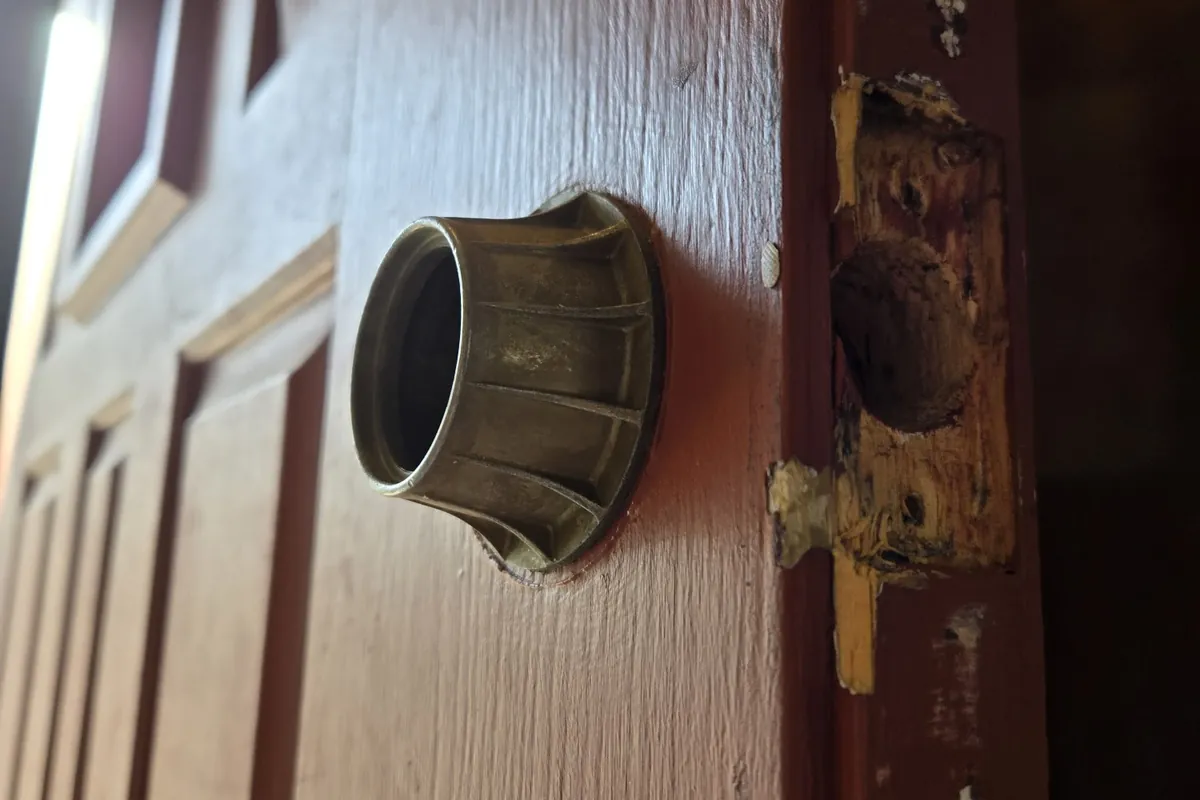
A door that won’t latch is almost always missing the strike plate by a small amount, and the direction it misses tells you the cause. Hitting low usually means the door has dropped at the hinges. Hitting high usually means the strike sits too low or the frame has moved. Not reaching at all usually means weatherstripping or a worn latch. Find the contact point first, then fix the hinges before you touch the strike plate, because loose hinge screws are the most common cause and the only fix that costs nothing to undo.
There is one more question worth asking before any of that, and almost nobody asks it: did this door latch fine a few months ago? If it did, you may be chasing a problem that moves with the seasons, and permanently chiseling the jamb in November is how you end up with a door that won’t latch next July instead. Here is how to tell the difference.
Doors that stick, drag and stop catching are a steady part of my week around Topeka, and most of them come down to four or five things. Let’s go in the order that keeps your options open.
Step one: find out exactly where the latch is hitting
Do not guess this by eye. The gap is usually an eighth of an inch or less, and guessing wrong means you file the wrong edge of a hole you cannot unfile.
- Put a little lipstick, chalk, or a dab of grease on the end of the latch bolt. A marker works too, but a waxy mark transfers better.
- Stick a piece of masking tape over the strike plate so the mark lands somewhere you can read it.
- Close the door normally. Not a slam, just how you would close it.
- Open it and look at the tape. The mark shows you where the latch is actually arriving.
On a deadbolt, do the same thing but turn the key or thumb turn a few times against the closed door so the bolt marks the strike.
| Where the mark lands | What it usually means | Where to start |
|---|---|---|
| Below the strike opening | The door has dropped on its hinges. This is the most common one by a wide margin. | Hinge screws, top hinge first |
| Above the strike opening | The strike is set too low, or the frame has lifted or racked. | Check the season question below before moving anything |
| On the latch side of the opening, centered | The door is not closing far enough. Usually weatherstripping, a thick coat of paint, or a bent strike tab. | Weatherstrip and the strike tab |
| Dead center but it still won’t catch | The latch bolt is not extending fully, or the mortise behind the strike is too shallow. | The latch mechanism and the bolt pocket |
Write down what you found. You are going to want it in six months if this turns out to be seasonal.
Step two: the question every other guide skips
Search this problem and you will get the same three fixes everywhere: tighten the hinges, file the strike plate, move the strike plate. Two of those three are permanent. Not one of those pages tells you how to work out whether your door is going to drift back on its own.
That matters here more than it does in a mild climate. Wood takes on moisture from humid air and gives it back to dry air, and it changes size as it does. The USDA Forest Products Laboratory puts it plainly: the moisture left in wood tends to come to equilibrium with the relative humidity of the air around it. A Kansas house in late July and the same house in January, sealed up with the furnace running, are two very different environments, and a wood door and jamb feel the difference. Houses themselves shift a little through the year too, which is why interior door frames in older homes go slightly out of square and come back.
So before you remove any material, run through this:
- When did it stop latching? A door that has never latched right since you moved in is a hardware or installation problem. A door that worked all summer and quit in October is a seasonal suspect.
- Is it only this door? Walk the house and close every door. If three doors on the same floor all got fussy in the same month, that is the house moving, not three coincidental hinge failures.
- Look at the gap all the way around. Stand where you can see the gap along the top, the latch side and the hinge side. An even gap that has simply shifted sideways is different from a door visibly tipped into one corner.
- Check the corners of the door casing. Hairline cracks in the drywall at the upper corners of door openings, or trim joints that have opened slightly, are a sign the opening itself is moving with the season.
- Does it bind as well as miss? A door that scrapes the jamb at the top on the latch side and also won’t catch is usually swollen or racked, not worn.
If the answers point at seasonal movement, do the reversible fixes below, live with it, and note the date. If the same door is still off in six months, it is not the season and you can adjust the strike with a clear conscience. If you move the strike now and the door starts latching again in spring, you will be back out there with a chisel putting it where it was.
Step three: the fixes that don’t commit you to anything
Everything in this section can be undone. Do all of it before you remove a shaving of wood or metal.
Tighten the hinge screws, properly
Open the door, take the weight off it, and snug every screw in every hinge, on the door leaf and on the jamb leaf. Half the doors I get called about are fixed right here and nowhere else.
If a screw spins and never tightens, the hole is stripped. Two ways out. The quick one is to drive a few wood toothpicks or a glued hardwood sliver into the hole, snap them off flush, and drive the screw back into fresh wood. The better one, on the top hinge of any door that has dropped, is to replace one short screw with a 3 inch screw that reaches past the jamb and bites into the framing behind it. That single screw pulls the top of the jamb back toward the wall and lifts the latch edge of the door. On a sagging door it often moves the latch up the eighth of an inch you needed.
Drive it snug and stop. Run it in hard and you can bow the jamb and create a new problem on the hinge side.
Check the latch itself
With the door open, push the latch bolt in with your thumb and let it go several times. It should snap back out fast and sit fully extended. If it is slow, gritty, or does not come all the way out, the mechanism is the problem and no amount of strike plate work will help. A shot of dry lubricant in the latch body fixes some of them. A worn lever or knob that has started spinning on its spindle will not come back, and that is a hardware swap.
On exterior doors, look at the weatherstripping
Weatherstripping is compressible when it is new and stiff when it is cold and old. If the mark on your tape says the latch is arriving centered but a quarter inch shy, the door is being held off the jamb. Press the seal with your thumb. If it feels hard rather than springy, it has done its years. Replacing a worn seal is cheaper than reworking the strike, and it also stops the draft you have been feeling at the bottom of that door since the weather turned.
Bend the strike tab
Most strike plates have a small metal tang on the latch side, bent into the opening. If the door closes but rattles or pops open, bend that tang slightly inward with a flat screwdriver to grab more of the bolt. Bending it back out is just as easy, so this stays in the reversible pile.
Step four: the permanent fixes, once you actually know
You have the contact mark, you have ruled out the season or decided to accept it, and the hinges are tight. Now you can remove material.
- Off by about an eighth of an inch or less: open up the strike plate hole with a half round file in the direction the latch needs to go. Take the plate off the jamb first, file it in a vise, deburr the edge and put it back. Filing it in place chews up the wood around it and looks it.
- Off by more than an eighth: move the plate. Unscrew it, reposition it, scribe around it, pare the mortise to the new outline with a sharp chisel, and enlarge the bolt pocket behind it. Fill the old screw holes with glued dowel or toothpicks so the new screws do not wander back into the old ones.
- Door dropped and the long screw was not enough: shim behind a hinge. A cardboard or thin plastic shim behind the bottom hinge leaf pushes that corner out and tips the latch edge up slightly. Shimming the top hinge does the opposite.
- Bolt pocket too shallow: a deadbolt needs the full depth of its throw behind the strike, commonly about an inch. If the bolt bottoms out on wood it will never lock cleanly. Drill the pocket deeper rather than fighting the alignment.
Fill, sand and touch up the paint when you are done. A moved strike plate leaves a shadow of the old mortise, and five minutes of filler is the difference between a repair and a scar.
Storm doors and cold snaps are their own thing
A storm door that won’t latch usually is not a strike problem at all. These are light aluminum frames with a closer at the top, and the closer is what holds the geometry. If the closer has lost its gas pressure or the mounting bracket has pulled loose from the jamb, the door no longer arrives square and the latch misses. Check the bracket screws and the closer before the latch.
The other storm door classic is the sweep at the bottom dragging on the threshold after the first hard freeze lifts things slightly. That is an adjustment, not a repair.
On main exterior doors, a cold snap can push a marginal door over the line in a single night. The National Weather Service office in Topeka publishes our normal first freeze dates, and they land in the back half of October most years, which is exactly when the calls start. If an exterior door has been borderline all autumn, deal with it before the weather sets in rather than during. While you are out there, the outdoor faucet on that same wall is probably due for attention too.
When it is not the strike plate at all
A few failures look like a latch problem and are not:
- The knob or lever spins loose. The set screw is stripped or the internal cam is finished. The latch is not retracting or extending on command any more. That is a hardware replacement.
- The hinge screw holes are destroyed. Past a certain amount of chewed out wood, toothpicks stop working and the jamb needs a proper repair or a new hinge location.
- The frame is visibly out of square. If the gap along the top of the door tapers noticeably, something structural has moved and adjusting the strike is treating the symptom.
- The door itself is warped. Hollow core interior doors twist. Close it and look at whether all four corners touch the stop at once. A twisted door will never latch reliably and is cheaper to replace than to fight.
The first two of those are ordinary door handle and lock replacement work, and they are a good moment to bring every door in the house onto matching hardware while somebody is already set up for it.
Honestly, which of these is a DIY job?
Most of it. Tightening hinge screws, running one long screw into the framing, marking the contact point, bending a strike tab, and replacing weatherstripping are all genuinely homeowner jobs, and I would rather you do them than pay somebody to turn a screwdriver. If the long screw fixes your door in ten minutes, that is a good outcome and it cost you nothing.
Where it is worth a call: when the strike needs moving and you do not own a sharp chisel, when the hinge holes are too far gone for toothpicks, when the door is warped or the frame has moved, when the lockset itself has failed, or when it is one of six things on a list you have been meaning to get to. That last one is most of them, and it is the whole reason I work the way I do. Doors that won’t latch sit on the handyman services list alongside the drywall patch and the shelf that never went up, and they all get done in one visit instead of three.
Landlords, this one is worth catching at turnover rather than at 9pm on a tenant’s first night. A door that does not latch is a security complaint waiting to happen, and it is quick work when the unit is empty. That is part of standard rental property repairs. For the rest of the quiet list a house accumulates, see home repairs.
Common questions
- Why won’t my door latch in the winter?
- Because the door, the jamb and sometimes the opening itself change dimension as the air around them dries out. Wood comes to equilibrium with the relative humidity around it, and a heated house in January is far drier than the same house in summer. If the door latched fine in July, tighten the hinges and wait rather than moving the strike plate, or you will have the opposite problem when the humidity comes back.
- Why do I have to slam my door for it to latch?
- Something is holding the door off the jamb, so the latch only reaches the strike under momentum. On an exterior door it is usually compressed or stiffened weatherstripping. On an interior door it is often built up paint on the stop, or a strike tab bent too far into the opening. Mark the latch with chalk and close the door gently to see where it is arriving short.
- Should I file the strike plate or move it?
- File it if the latch is missing by about an eighth of an inch or less, and move it if the gap is larger than that. Either way, take the plate off the jamb and work on it in a vise rather than filing it in place, which tears up the surrounding wood. Tighten the hinges first; that often closes the gap and saves you the job entirely.
- How do I fix a bedroom door that won’t latch?
- Start with the hinge screws, because interior doors are light and almost always drop rather than shift. Snug every screw, and if one spins, pack the hole with glued toothpicks or drive a 3 inch screw through the top hinge into the framing behind the jamb. That lifts the latch edge. Only file or move the strike plate if the door still misses after the hinges are solid.
- Why won’t my storm door latch?
- Usually the closer, not the latch. A storm door is a light frame that relies on its closer to arrive square, so a closer that has lost pressure or a jamb bracket whose screws have pulled loose will leave the latch missing the strike. Check and retighten the bracket screws first, then look at whether the closer still resists when you push the door shut.
- Can a longer hinge screw really fix a door that won’t latch?
- Often, yes, on a door that is missing the strike low. A standard hinge screw only bites the jamb, which is thin trim stock. A 3 inch screw reaches through it into the structural framing and draws the top of the jamb back, which tips the latch edge of the door upward. Drive it snug and stop, because overdriving it bows the jamb.
Not sure which one you’ve got?
Text two photos to (785) 408-6846: one of the latch with the door open, and one of the strike plate and the jamb around it. You’ll get a straight answer back about what it needs, usually the same day, and an estimate costs nothing. I work anywhere in Topeka, seven days a week, and I’m fully insured.